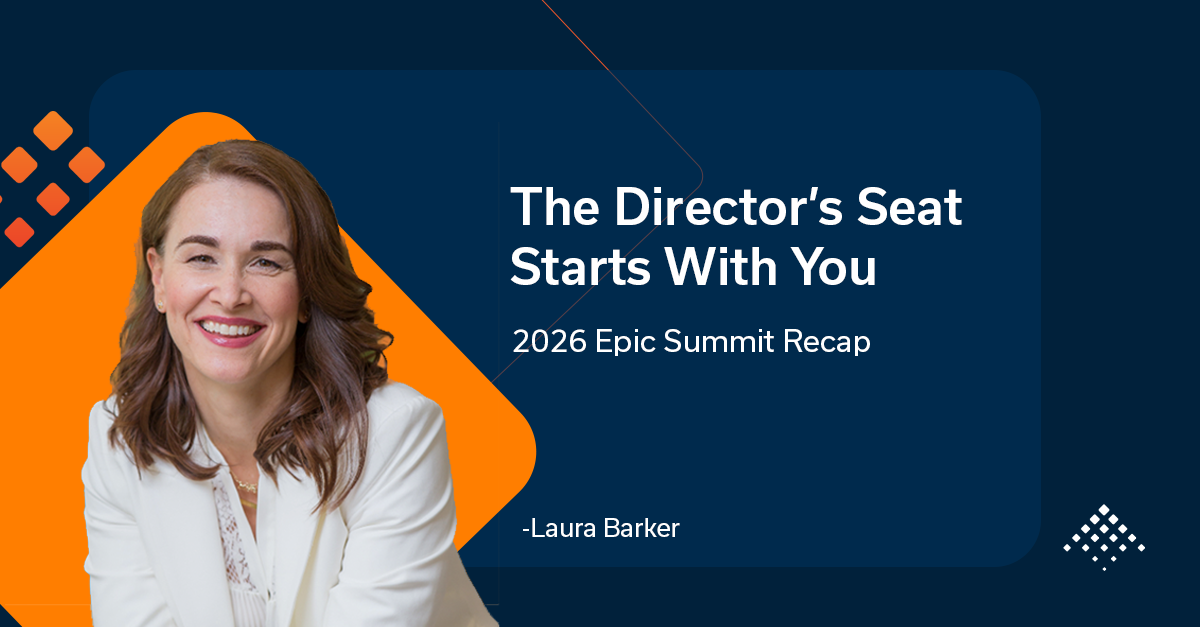
At the EPIC Summit in Santa Barbara, TalentRise Senior Director Laura Barker took the stage twice. First, she served as moderator of the Authentic Leadership panel. Then, alongside colleague Kristen Fox, Laura co-facilitated TalentRise’s workshop, Lights, Camera, Collaboration: Leading Through the 3 Cs.
The common theme: great leadership is an inside job. When we work on ourselves, we show up authentically and everyone benefits.
The panel—Authentic Leadership: Leading Teams Through Change, The Mindsets, Moves and Moments That Matter—opened with an ask. “Describe your favorite way you played as a child and its impact on your leadership.” Laura’s answer was skipping rope. Traditional and Double Dutch. It wasn’t just nostalgic. It mapped directly onto how she now leads. Today, that same instinct shapes how she leads: finding rhythm in the work, connecting through story, and knowing when to jump in versus when to hold the rope steady for someone else.
The panel tackled a tension that kept surfacing throughout the summit. AI is reshaping authentic leadership, and there is a real risk that it becomes a barrier to genuine human connection rather than a bridge. As AI becomes more embedded in how we communicate and work, leaders must be even more intentional about preserving trust, empathy, and meaningful human connection.
EPIC’s theme of collective exploration made it the perfect backdrop for both sessions.
“Authentic leadership is an internal job, not an external, performance-based one.”
Panel Takeaways
- Change requires more than process; it requires humility and humanity –The ability to stay flexible and shift perspective is what separates leaders who evolve from those who get stuck. Authentic leaders bring people into change. They do not manage it from a distance. They create healthy habits that help teams see beyond singular points of view. That is what distinguishes leaders who guide change with authenticity, clarity, and empathy.
- EQ is the foundation of psychological safety –Doing the inner work of self-discovery and development. Learning our triggers. Building tactics that bring us back to balance. These are the habits and practices strong leaders cultivate in themselves and encourage across their teams. In these environments, people feel safe to speak and take risks. After all, emotional intelligence isn’t simply a nice-to-have soft skill; it’s the very foundation of a healthy team culture.
- We never navigate change alone –The biggest mistake leaders make is thinking they alone drive and influence change. Navigating change successfully is a collective effort. Leaders play an important role, but authentic leadership begins with recognizing that people do not move through uncertainty because they were directed to do so; they move through it when they feel heard, supported, and meaningfully included.
Workshop Takeaways
The workshop extended those ideas through a film director lens. Leadership, Laura and Kristen argued, is much like directing a film or television series. The leader’s role is not to be the star, but to create the conditions in which others can deliver their best work. Participants walked away with practical toolkits built around six tools:
- Contracts (Trust): Trust empowers voice. It is the foundation that makes every other tool work.
- Budget (Accountability): Accountability enables execution. Great teams apply blameless discernment, not judgment.
- Boom Kit (Active Listening): Listening isn’t waiting to talk. It’s seeking to understand across three levels of depth.
- Script (Productive Conversations): Every conversation is an opportunity to reinforce trust. Clear is kind.
- Editing (Self-Management): Leaders reduce harm when they manage their own emotional responses first. The 3:1 ratio, three positive thoughts to every negative, is a daily practice.
- Clapper Board (Commitment): Commitment is where thoughts become action. Define what you will embody and what you will do.
Ultimately, EPIC’s cross-industry audience of entrepreneurs, innovators, creatives, and educators brought incredible energy to every exercise. It was exactly the kind of collective exploration that seeds true growth!
Laura’s hope for everyone in the room was simple: leave with a renewed commitment to doing the inner work. Authentic leadership is not a performance we put on for others. It begins with how we understand ourselves, how we respond under pressure, and how we create the conditions for others to thrive.